Showing enough politeness in Japanese business emails is really important. So when writing emails in English, Japanese really worry about how polite their English is. They don’t have a clear idea about which words and phrases are “formal” or “casual”. At work however, the clock is ticking and they are under pressure to write something.
In this situation they will probably do the same thing as before: they will collect the same old email phrases they always use, make an email, hit the send button – and then worry once again whether it was polite enough.
So, to help my students, I’ve developed these email writing materials:
– A politeness system and questions to ask before writing;
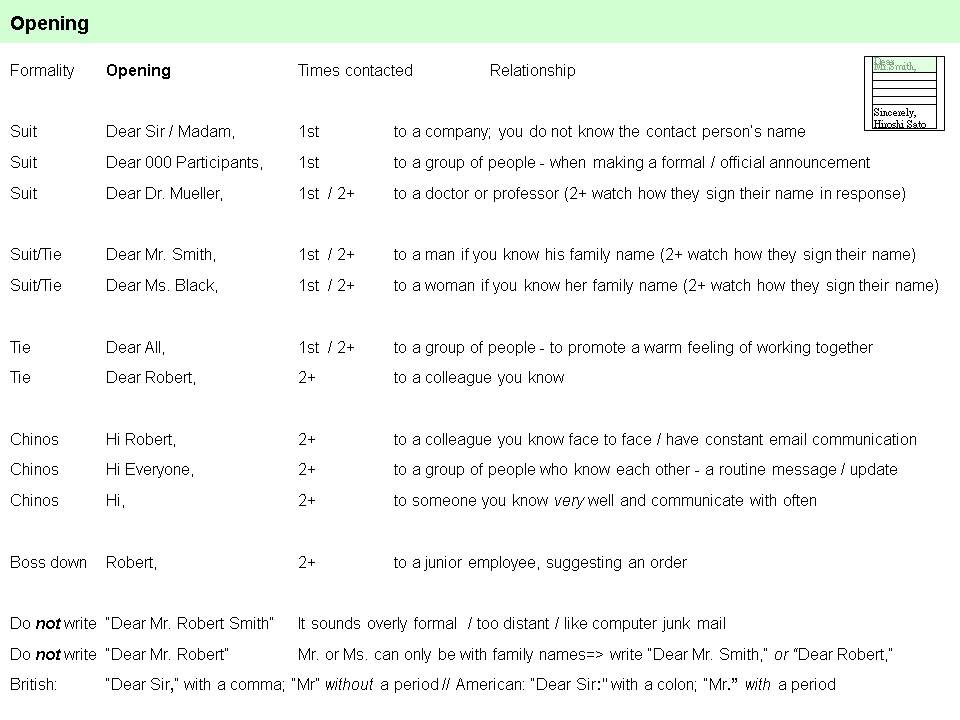
– Different levels of politeness for Opening (eg. Dear Mr. Smith,)
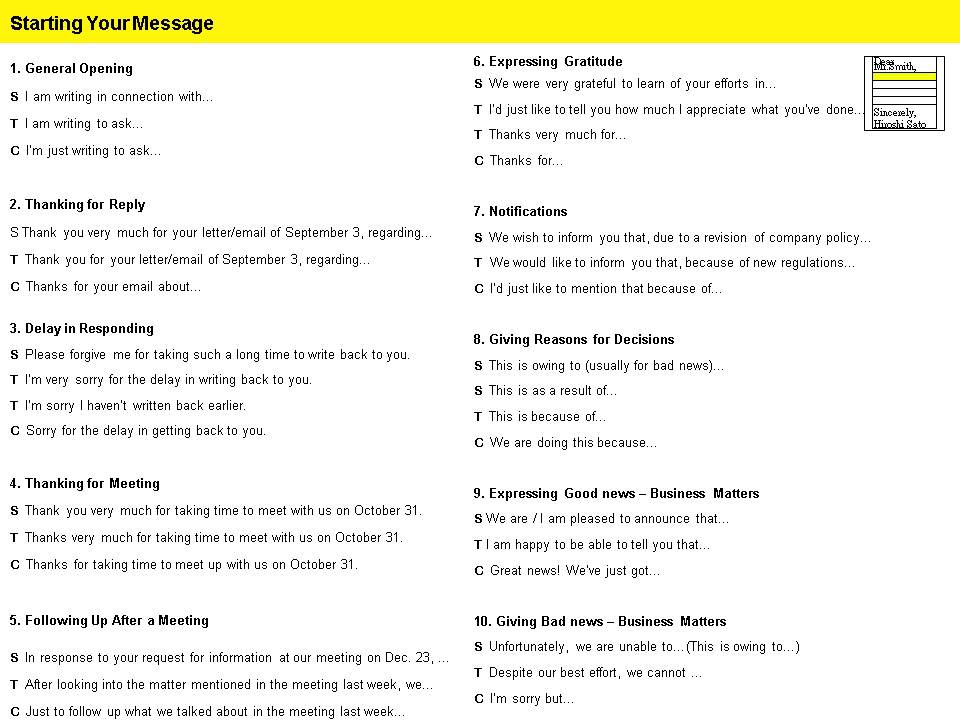
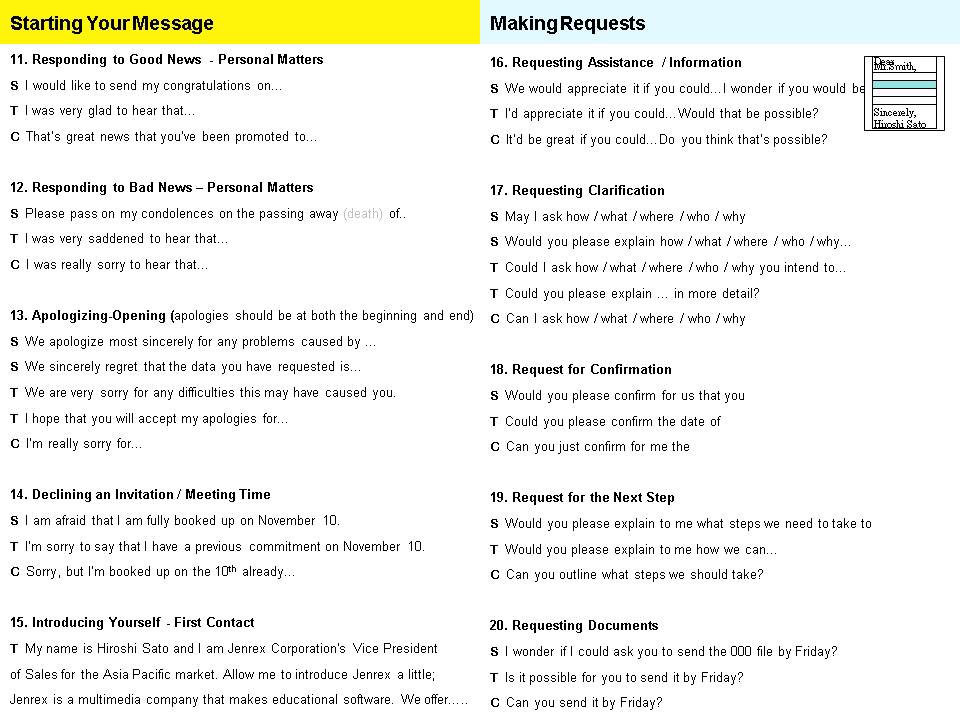
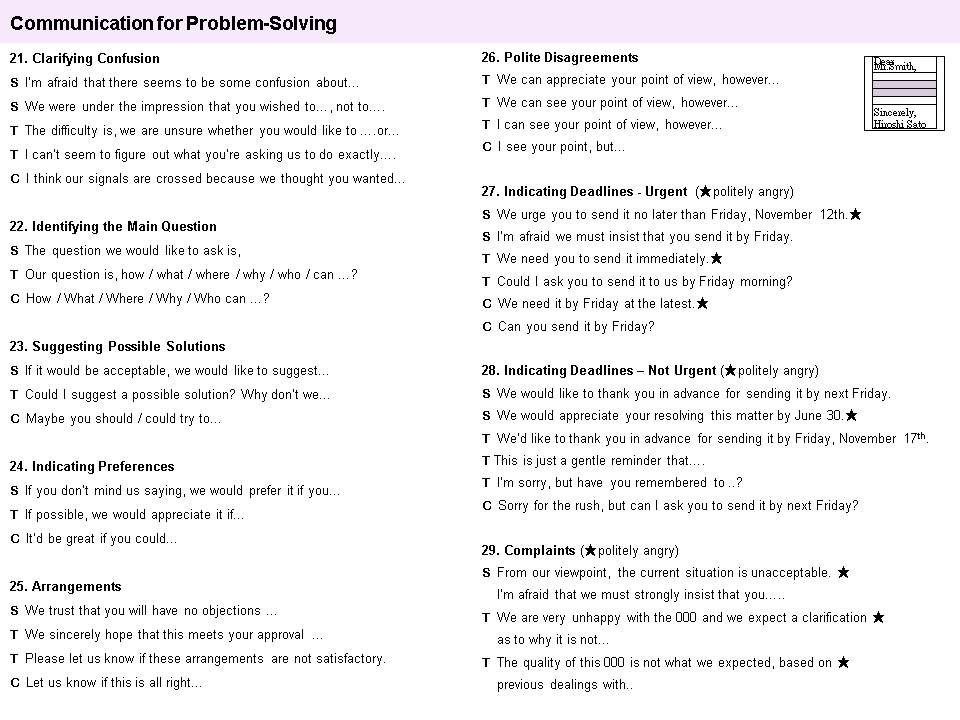
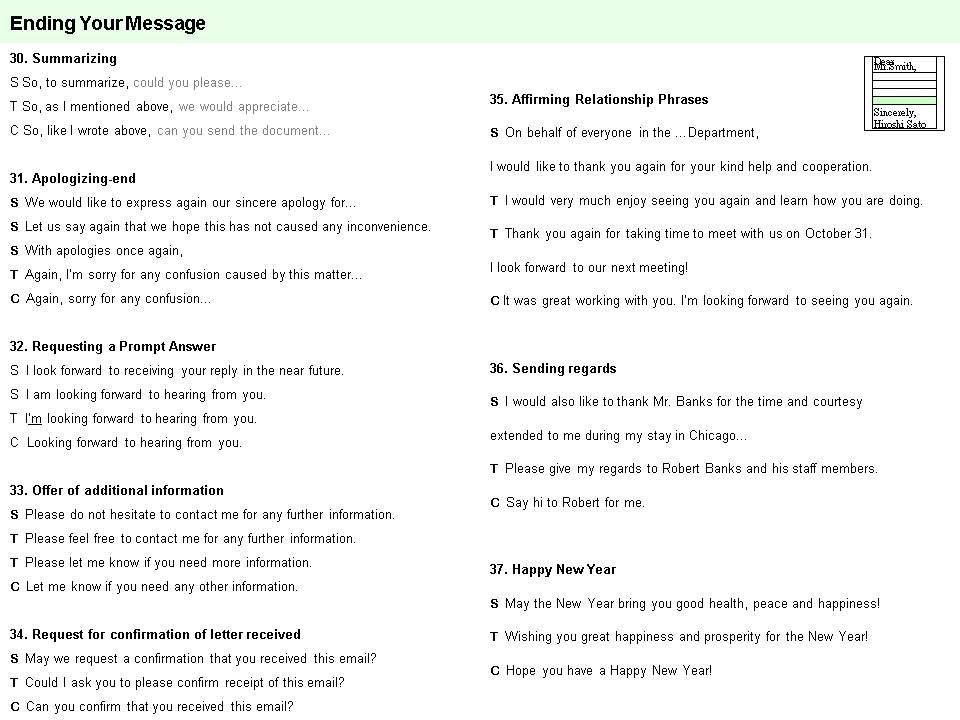
– 37 different situations, from Thanking to Complaining
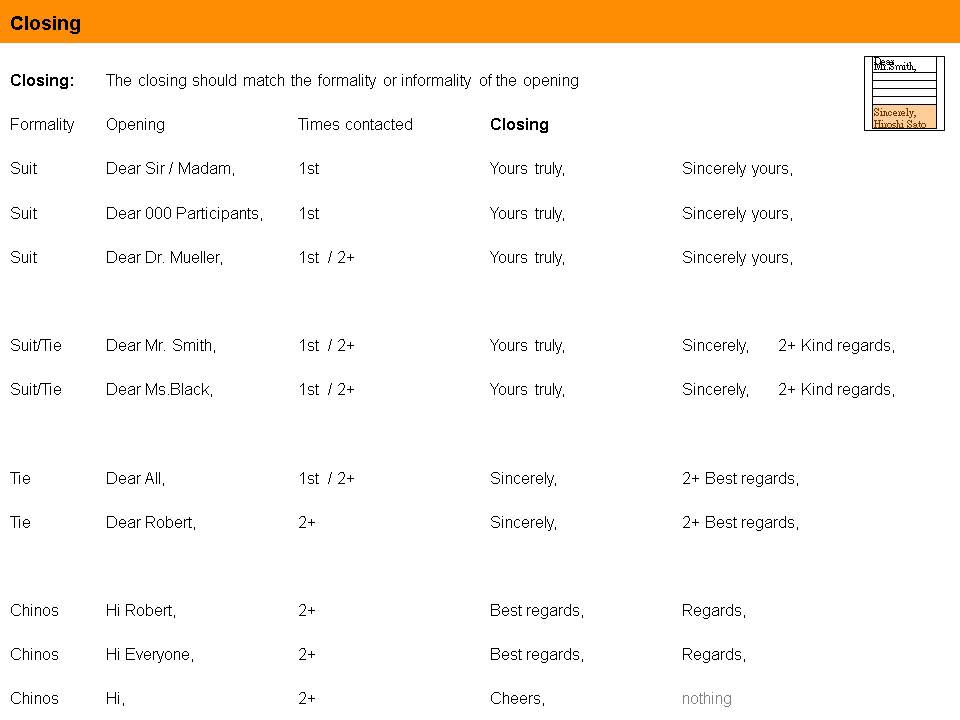
– Different levels of politeness for Closing (eg. Best regards,)
Politeness System:
S – Suit is very polite: it shows “deep bow” respect like尊敬語 and 謙譲語.
T – Tie is “we work together” polite for everyday business: Tie is used the most often in email and it is basically “safe” to use in every situation.
C – Chinos shows a “we are friends” level of respect: it is warm and yet professional n the following slides, I use the clothing Suit, Tie, and Chinos to show three levels of formality.
Questions to Ask Before You Write:
Contact: First contact – you should use Suit phrases to be safe.
Second, third, fourth contact: unlike Japanese email, which often stay at Suit level no matter how many times contacted, international emails will probably drop to Tie or Chinos from the second, third, fourth or fifth email, depending of course on the purpose of the communication.
When your first contact readers reply to you, check to see if they have “dropped down” from Suit to Tie level. This is a signal of friendliness: you are being invited to respond in Tie.
Names: How did they sign their name? If they have signed with their personal name (not family name), they are sending a friendly Chinos invitation. You should return the friendly gesture by replying with your personal name or a nickname.
Have you met your reader before in a face-to-face meeting, a teleconference or a TV conference? If yes, you should use Tie or possibly Chinos phrases to signal friendliness.
Making Requests: How inconvenient is your request? Difficult requests are more successful if they show “high Tie” or Suit level phrases; Tie and Chinos are fine for regular or weekly requests.
Requests and Rank: Due to different cultural ideas of hierarchy at work, it is very important for you to avoid “top – down” sounding phrases such as, “Please confirm this asap.”
“Please verb something” is an order. You are ordering your reader to do something that, in “everyone-is-equal” countries, may offend them. They will probably delay their reply or make no reply at all.
Write the original phrase, “Please could you confirm this asap?” or “Could you confirm this asap please?”
 Posted with Blogsy
 Advanced Business English Japan
Leave a comment