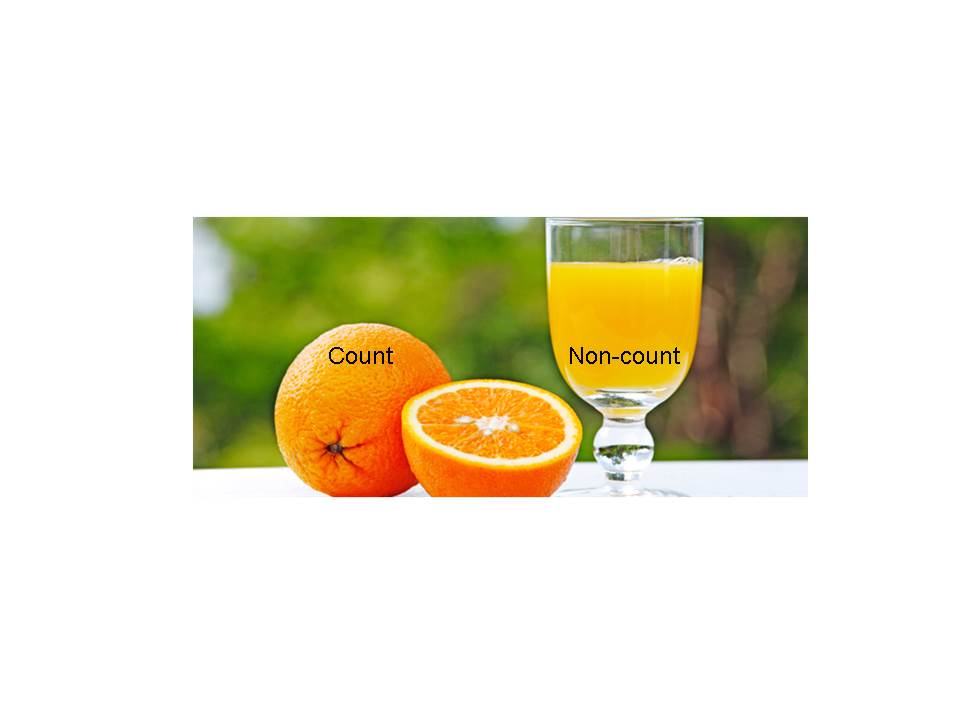
Understanding why something is a count noun or a non-count noun is really difficult for Japanese students, but it is essential for developing sentence-building skills.
The problem is these nouns (often put at the end of sentences) determine which grammar words (is are / do does / a-an the / much many / less fewer) they need to speak before they speak the count or non-count noun.
If I say, “There ….. oranges.”, it means two or more oranges (count). The verb must be “are”.
If I say, “There…orange juice.”, it means a liquid (which is non-count). The verb must be “is”.
This means that in real time students have to adjust their grammar backwards before speaking the count or non-count noun.
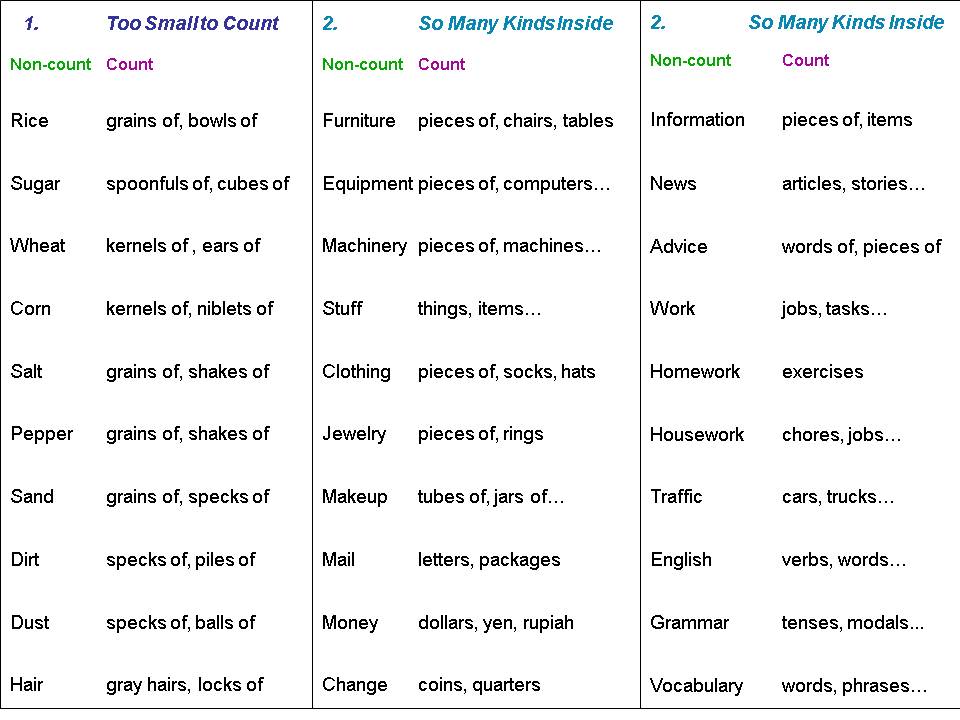
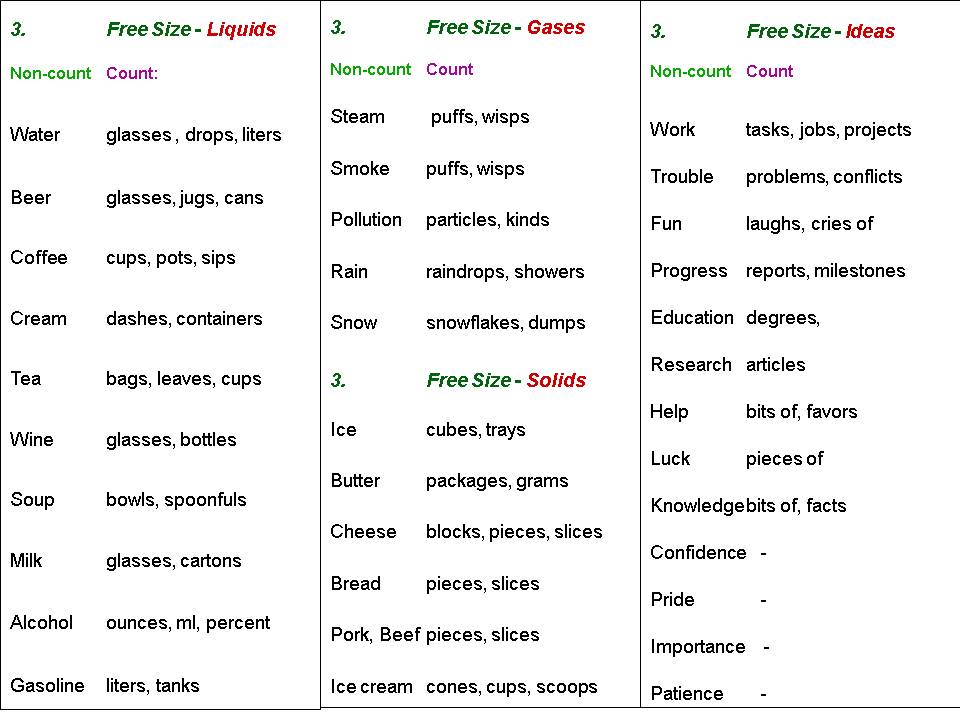
One major difficulty in working backwards is that students don’t know the logic behind non-count nouns in the first place. So, on the slides below I put non-count nouns into five main logical groups. The most common non-count nouns are in the left column: in the right column are the words that change them into count nouns.
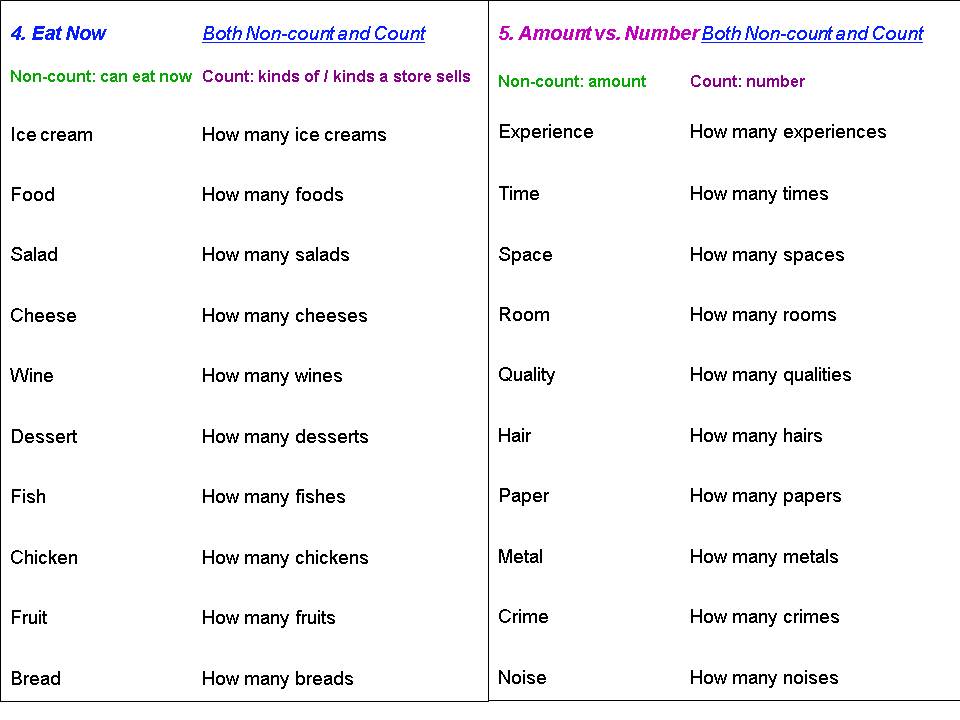
4. Eat Now: these non-count nouns can also be count nouns. The difference is, How much chicken can you eat now?” is different than “How many chickens can you eat now?” because most people cannot eat more than one chicken now. So we say “How much chicken?”
5. Amount vs. Number: these non-count nouns can also be count nouns. Count nouns focus on number: How many times have you gone to your office? In contrast, non-count nouns focus on “amount”: “How much time do you work there each day?
 Advanced Business English Japan
Leave a comment